
The Quiet Catastrophe Between the Exam Room and the Kitchen Table
And why we're building in this space.
Arpan Parikh, MD MBA FAPA, Amit Parikh, MD, and Kyle Alwyn
We’ve been blaming the wrong people
When we started Kin, we kept circling the same moment. It happens millions of times a year in American clinics and goes almost entirely unexamined. A patient and their family leave the exam room saying, “Thank you.” They walk down the hallway, get into the elevator, and by the time the doors close, the daughter is already asking the mother, “Wait, what did the doctor say about the pill?”
That moment is when most of American healthcare quietly fails, and the industry has blamed the patient. The clinical vocabulary for this failure is consistent: non-adherence, non-compliance, no-shows, missed dosing, dropout, and low engagement. The whole apparatus rests on a quiet assumption: that the patient is the part of the system that didn’t do their job.
But blaming the patient is the symptom of a deeper mistake. What the industry calls a compliance problem is actually a memory problem, and the difference means the solution isn’t what we once thought.
The premise of the visit is unreasonable
Consider what a routine specialty visit asks of the patient. Show up, usually after time off work and often with a family member who has also taken time off work. Sit through fifteen to twenty-five minutes of dense information delivered by an expert in the highest-stakes language we have, often while you’re scared. Hear a new or updated diagnosis, a medication change with a name you’ve never spoken before, side effects, and escalation triggers. Hear “any questions?” twice, and decline because you’re still processing. Walk out the door. And then, for the next ninety days, behave consistently with everything you just heard.
This is not a reasonable ask of a healthy person, and it is dramatically unreasonable of a sick one. Stress impairs encoding, jargon impairs comprehension, and the visit takes place in a sterile room at a rushed pace, with an expert across the desk. None of it is a setting in which adult learning happens. The research has been consistent for decades: patients forget 40 to 80 percent of what they hear in a clinical encounter, and of what they remember, roughly half is wrong. This isn’t the failure of a patient.
We’ve been calling it the wrong thing
The behavior the industry has been measuring as “did the patient do what they were told” is, almost entirely, “did the patient remember what they were told.” Those are not the same problem, and the difference matters because the solutions are different.
You can’t solve a memory problem with more education at the moment of the visit (we’ve all tried that, and it hasn’t worked), or with a portal that sends a message back to a system most patients still cannot parse, or by sending the patient home with a sheaf of paper printouts in twelfth-grade English when only twelve percent of American adults read at proficient health-literacy level, or by calling them after the fact and asking, in the gentlest possible voice, why they aren’t doing the thing they could not retain to begin with.
The reason the industry keeps calling this problem “non-compliance” is that it means the failure sits with the patient. Calling this what it is (a memory problem) locates the failure in the design of our systems.
Why the industry hasn’t fixed this
The industry has invested for decades in the wrong place. The visit, the documented note, the codes attached to it: that is what the system can see, what gets billed, coded, audited. The infrastructure has been built around making the visit legible. But the visit is the receipt. The care is what happens in the eighty-nine days that follow: whether the patient takes the medication, whether they catch a side effect before it becomes an admission, whether their daughter two states away knows what to look for when she calls Sunday night. We’ve spent two decades getting better at the receipt and almost nothing in the eighty-nine days, then expressed surprise that outcomes are mediocre.
The system has also been built around a legal fiction: that the patient is one person. In real life, the patient is rarely alone. A 72-year-old with heart failure goes to the cardiologist with her daughter. The husband texts after, asking what they said. A son calls from across the country. Sixty-three million Americans are doing this work, unpaid, every day, and the labor they perform is worth nearly $1 trillion per year, more than the entire amount Americans spend out of pocket on healthcare. The system that depends on them does almost nothing to support them. They are not in the chart, not copied on the after-visit summary, and they get the plan, when they get it at all, secondhand, from a tired family member at a kitchen table, hours later. When studies examine caregivers managing medications at home with the information they have, error rates reach as high as 1 in 3. When caregivers are formally engaged in transitional care, re-hospitalizations drop by up to 25 percent.
None of this is the fault of the doctors because it’s structural. The visit is the unit billing knows how to price. Liability prefers single-patient consent. EHR vendors built tools for the entities paying their bills, which are clinicians and health systems, not patients and their daughters. The gap between what’s been built for visits and what’s been built for the life around them is not an accident of inattention. It’s an accident of incentive.
What works, and what we built Kin to do
The evidence on what actually works is, by health services research standards, embarrassingly clear. When patients are given a recording of their visit, up to 72% listen to it, and 60% share it with family. When information is rewritten at a sixth-grade reading level, comprehension rises sharply. When mobile interventions enroll a caregiver alongside the patient, medication adherence improves measurably. None of these requires learning new physiology, discovering new drugs, or training new doctors. They are interventions on memory, comprehension, and the ad hoc team. The question is not whether they work, but why they have not yet been built into the standard of care.
The answer is the one we keep arriving at: the industry has been busy fixing a compliance problem that does not exist, instead of a memory problem that does. Most healthcare technology has been built for the people who deliver care. Kin is built for the people who live with it.
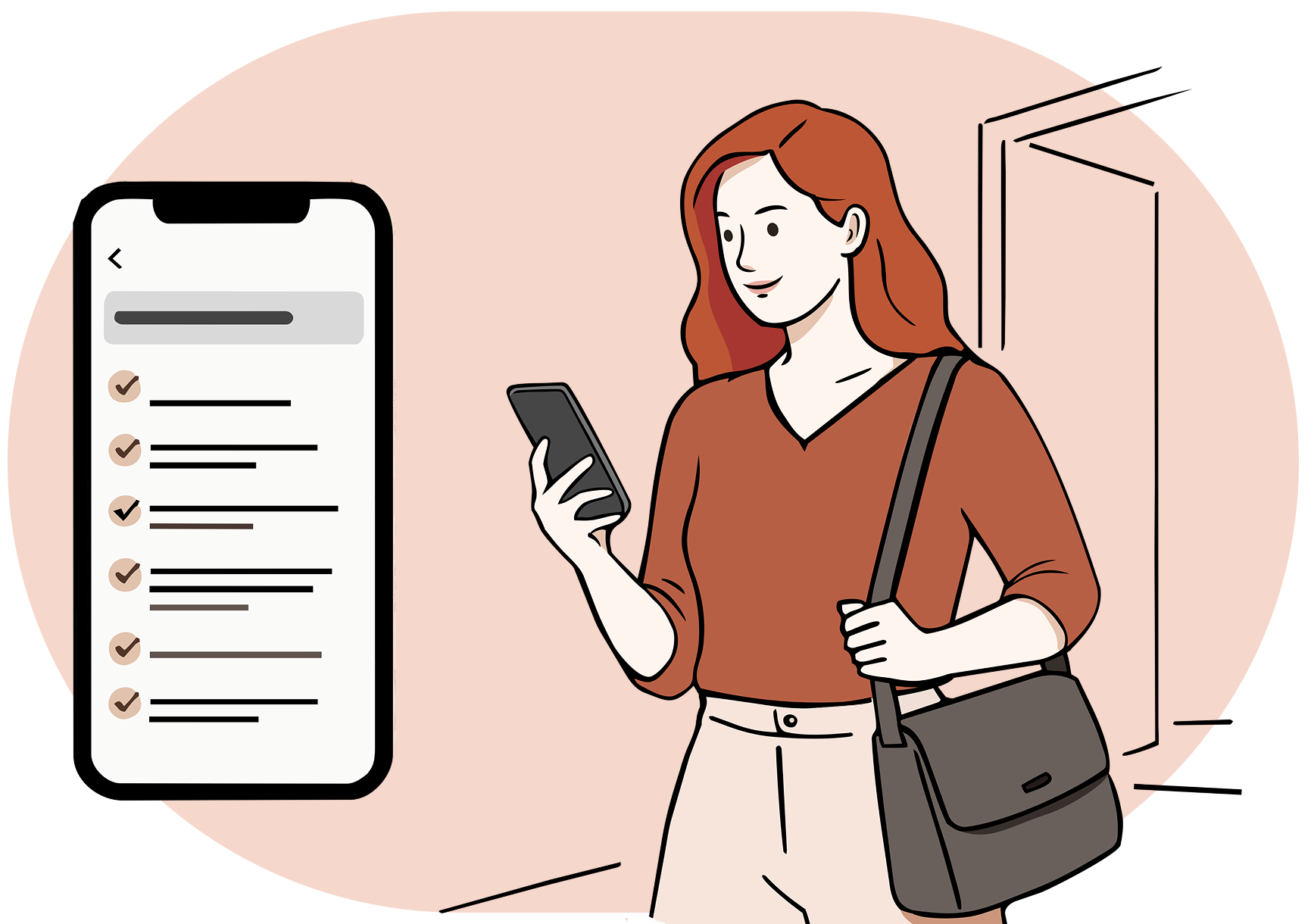
Kin is a free app on your phone. It listens during your medical appointments, captures what’s said, and turns it into a plain-language summary at a sixth-grade reading level anyone can actually use. Over time, every visit becomes part of a connected record the patient owns, stitched together across every clinician. It brings the people who help into the loop on the same terms as the patient: the daughter, the spouse, the brother. Our ambition is to keep Kin free for everyone, forever. We are not replacing the doctor or contradicting the care plan. We are the layer that keeps what was said in the visit legible at the kitchen table on day forty-two, and catalyzes understanding into action.
Calling it what it is
More than one hundred thousand Americans die every year because of “non-adherence.” That is roughly the population of Savannah, GA. Behind that number are families who came home from a visit doing their best, who didn’t quite remember, who didn’t quite understand, who didn’t quite know which question to ask. The problem doesn’t live with them. It lives in a system designed around an assumption about human memory that turns out not to hold up to contact with humans.
You fix this by recognizing that the visit is the smallest part of the care, that the patient is rarely a single person, and that whether someone “follows doctor’s orders” depends, more than almost anything else, on whether anyone in the room can remember what those orders were.
That’s the work, and it’s what we built Kin to do. We’ve been blaming the wrong people for the wrong problem for far too long.
We invite everyone to download Kin today, use it for yourself or a loved one, and share with anyone who you think will find it helpful. We also invite you to provide direct feedback on your Kin experience with us!
✌🏽 A + A + K

